ArtWire Editorial
ArtWire
Fair coverage is settled in the weeks before the doors open, by galleries that give editors one clear story and a picture they can use.
Art fair PR is won before the fair opens. By the time the preview begins, most editors have chosen which stands to visit and filed half of what they will publish. So the work runs in this order: settle on one story eight weeks out, send a short release with images at six weeks, write to named journalists at four, have a press pack ready at two, be on the stand for the preview, and follow up within a week of closing.
This guide sets out each step, with a timeline you can count back from any fair's first day.
Why is art fair PR different from exhibition PR?
An exhibition has a room and six weeks to itself. A fair gives you a stand, a few days and several hundred neighbours. Art Basel Paris alone lists 211 exhibitors from 41 countries and territories for its 2026 edition, and every one of them would like the same handful of writers to stop at their stand.
Those writers have hours, not days. They arrive with a route already planned, built from what reached them in the weeks before.
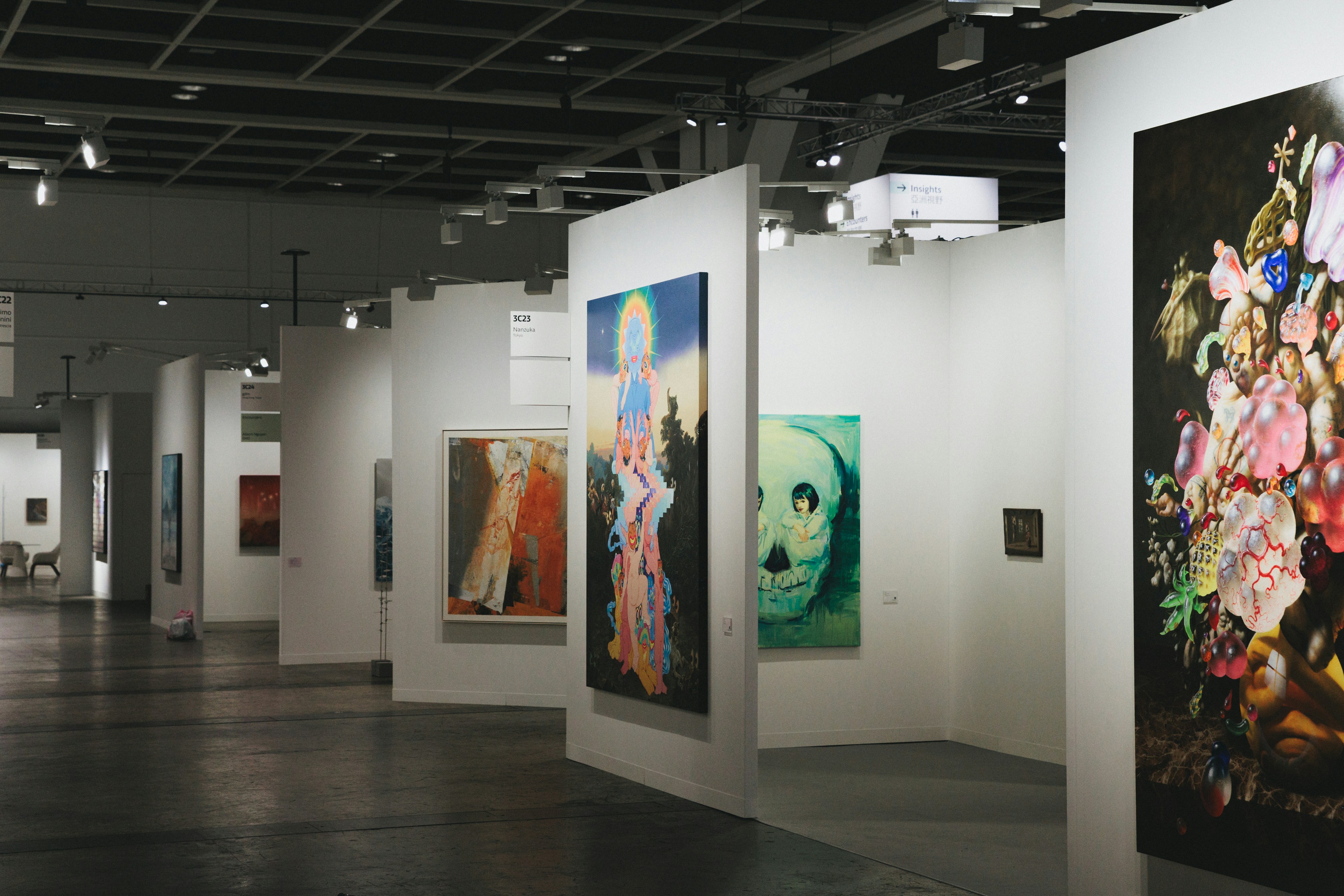 Art Basel Hong Kong 2025 spencer chow
Relevance decides who is on that route. In Muck Rack's State of Journalism 2026 survey, the most common reason journalists gave for deleting a pitch was that it had nothing to do with their beat. The survey covers journalists in general, not the art press alone, but a fair multiplies the effect: a critic who writes about painting is not looking for your design objects that week.
What is your one story?
The usual advice is to announce that you are exhibiting and give the stand number. Presence is not news. Every gallery in the hall is present.
A fair story is narrower than a gallery story. It is one of these:
- One artist shown alone, with a reason it is now.
- One work that has not been seen before.
- A first: a first fair, a first showing in that city, a first presentation of an estate.
- A pairing nobody else is making, with the reason for it.
Take an invented example. Orchard Row Gallery, from Bristol, is bringing the painter Ines Carrow to its first fair.
The announcement: Orchard Row Gallery is pleased to confirm its participation at the fair, stand C12, with a selection of works by gallery artists.
The story: Orchard Row Gallery makes its fair debut with a solo stand by Ines Carrow: six paintings on sailcloth salvaged from a sail loft that closed in 2025, shown outside Bristol for the first time.
The second gives an editor a first, a material and a reason to walk to C12. The first gives them a stand number.
The art fair PR timeline, week by week
Count back from T, the fair's first preview day. These are working conventions, not any fair's or publication's stated deadline. Monthly print titles work further ahead, and where an outlet publishes its own timing, theirs wins.
| When | What to do | What goes out |
|---|---|---|
| T minus 8 weeks | Settle the presentation and the one story. Confirm the stand number, the works and the artist's availability. | Nothing yet |
| T minus 6 weeks | Finish the release (300 to 400 words) and the image set. Tell the fair's press office what you are showing. | Release and images to long-lead titles and your researched list |
| T minus 4 weeks | Write to named journalists, one at a time, with the story and one offer: a preview appointment, an interview, a first look at a new work. | Personal pitches |
| T minus 2 weeks | Build the press pack. Confirm appointments. Brief everyone who will be on the stand. | Press pack link to anyone who replied |
| T minus 1 week | One reminder, with the stand number, preview hours and a mobile number. | Reminder to people who showed interest |
| Fair week | Be on the stand for the preview. Photograph the stand early and send installation views the same day. | Images to anyone who asked |
| T plus 1 week | Thank, follow up, log coverage, update the list. | Follow-ups and thank-yous |
If the release itself is the sticking point, the press release templates are a place to start.
How do you work with the fair's press office?
Every sizeable fair runs its own press operation. It accredits journalists, issues the fair's own announcements and is asked, constantly, what is worth seeing.
So make its job easy. At six weeks, send the press office your one story in three lines, with one image, a caption and a named contact. Ask two questions: whether there is a deadline for exhibitor news, and whether the fair compiles highlights for the press. Fairs differ, and the only reliable answer is theirs.
Do not expect the fair to do your press for you. It is promoting the whole hall. Your stand is your job.
What goes in an art fair press pack?
One link, opening without a login, holding:
- The release, on one page.
- Five to eight high-resolution images, each captioned with artist, title, year, medium, dimensions and photo credit.
- The stand number, the hall or sector, and the preview and public hours.
- A short biography of each artist shown.
- A named contact with a mobile number that will be answered on the stand.
- A note on what is available: interviews, a walk-through, new images once the stand is hung.
The pack that fails is the PDF attached to a group email in fair week, with the pictures locked inside it. Nobody on a fair floor is extracting images from a PDF on a phone.
Who should you pitch, and how many?
Fewer people than you think. A fair list has four parts: writers who cover that fair every year, critics and editors whose beat matches your artist, the press of the city the fair is in, and the press of the city you come from, for whom "local gallery shows abroad" is a story in itself.
Thirty to fifty names is a sound working range. Each gets a private email that says why this stand is for them. ArtWire sends every pitch that way, never CC and never a mass blast, and its contact database can be filtered by specialty, publication, region or beat to find the people in the second group. Whatever you use, read what each writer published about last year's edition before you write to them. It is the best guide to what they will want from this one.
What do you do on the stand during fair week?
The preview is when the press is in the building. Have one person on the stand throughout who can talk about the work in plain sentences, and make sure they know which journalists have said they will come.
Keep a printed page to hand: the story, the captions, the contact. Let visiting writers look before you speak. Note who came, what they asked and what they photographed.
Photograph the hung stand as early as you can, before the aisle fills, and send two or three installation views that day to anyone who asked for images. A reporter filing from the fair that evening needs the picture then, not on Monday.
If you are asked about sales, say only what is accurate and what the artist and any buyer are content to have reported. "We do not discuss sales" is a complete answer.
What happens after the fair?
Within a week, write to everyone who visited, replied or wrote. Thank those who covered the stand and share the piece with the writer credited. Send the rest a short note with installation views and a line on what the artist is doing next.
Then update the list while the week is fresh: who came, who answered, who asked to be left alone. Getting covered at a fair is a craft that improves with each edition, and the notes you make now are how. A gallery that runs its own press starts the next fair with a list of people who already know its name.
Which art fairs are left in 2026?
Dates as published by the organisers and checked on 11 October 2026. Confirm them before you plan.
| Fair | City | 2026 dates |
|---|---|---|
| Frieze London and Frieze Masters | London | 14 to 18 October |
| Art Basel Paris | Paris | 23 to 25 October (preview days 21 and 22 October) |
| Artissima | Turin | 30 October to 1 November |
| Paris Photo | Paris | 12 to 15 November |
| Art Basel Miami Beach | Miami Beach | 4 to 6 December |
For the October fairs the planning window has closed, and what remains is the stand itself and the follow-up. For Art Basel Miami Beach there is still time: counting back from Friday 4 December, the six-week mark is Friday 23 October, four weeks is Friday 6 November and two weeks is Friday 20 November. If preview days fall earlier in that week, count from the first of them.
ArtWire keeps a calendar of more than 60 art fairs with their press deadlines, which saves doing this arithmetic for each one.
Before a gallery works this way, a fair is five days of hoping the right person walks past. After, the right people arrive with your stand already on their route. The fair opens on the preview day. The press opened six weeks earlier.
FAQ
What is art fair PR?
Art fair PR is the work of getting a gallery's stand noticed and written about by the press before, during and after a fair. It covers choosing one story, writing a release, pitching named journalists, preparing a press pack, hosting writers at the preview and following up afterwards.
When should a gallery start PR for an art fair?
As a working rule, eight weeks before the fair's first preview day. Settle the story then, send the release and images at six weeks, pitch named journalists at four and have the press pack ready at two. Monthly print titles plan further ahead, so contact them first.
Do galleries need a publicist for an art fair?
Not necessarily. A publicist brings relationships and time, which matter most for large presentations. A small gallery with one clear story, a researched list of thirty to fifty journalists and a usable press pack can run its own fair press, provided someone starts eight weeks out and stays on it.
What should an art fair press release include?
In 300 to 400 words: the gallery, the fair, the stand number, the dates, the artist or work being shown and the reason it matters now. Add one quote, a short biography, a named contact and a link to captioned high-resolution images. Put the story, not the stand number, in the first sentence.
How do you get journalists to visit your stand?
Write to each one personally about four weeks ahead, say why the presentation fits what they cover, and offer something specific such as a preview appointment or an interview with the artist. Send one reminder a week before with the stand number and preview hours. Nobody can guarantee a visit.
Run your next fair's press yourself: start a 14-day trial, no card required.